Important: This article is general information about California law and common practice, not legal advice. Responsibility depends on your governing documents, lease, insurance policies, and the facts. For a dispute, consult a qualified attorney.
Key takeaways
- In a condo or townhome, responsibility usually turns on where the leaking pipe is and how your CC&Rs define it.
- California's Davis-Stirling Act sets default rules, but the declaration can change them.
- Renters: plumbing repairs are generally the landlord's job — report the leak in writing promptly.
- Whoever is responsible, locating the leak accurately is the first step everyone needs.
In this article
- Why slab leaks are different in shared buildings
- Condo and townhome owners: what California law says
- Apartment renters: landlord duties in California
- Landlords and property managers
- What to do first — whoever you are
- How insurance fits in
- Why accurate leak location settles a lot
- The bottom line
- Frequently asked questions
- Sources
A slab leak in a single-family home is stressful enough. In a condo, townhome, or apartment, it raises a second question right away: whose problem is it? The pipe may run under your unit but serve your neighbor. It may belong to the association, to you, or to your landlord. And the water damage may cross unit lines. Here is how responsibility is commonly sorted out in California, and what to do in the meantime.
Why slab leaks are different in shared buildings
- Shared plumbing: Supply lines under a slab may serve more than one unit, or run under one unit to reach another.
- Divided ownership: Condo communities split property into separate interests (your unit), common areas, and sometimes exclusive use common areas (such as a patio assigned to one unit).
- Multiple insurance policies: The association's master policy and each owner's unit policy may both be involved.
- Multiple decision-makers: Boards, managers, owners, tenants, and landlords may all need to approve access or repairs.
Condo and townhome owners: what California law says
Most California condominium and planned-development communities are governed by the Davis-Stirling Common Interest Development Act. Its default maintenance rule is in Civil Code § 4775:
- Common area: Unless the declaration provides otherwise, the association is responsible for repairing, replacing, and maintaining the common area.
- Separate interests: Unless the declaration provides otherwise, each owner is responsible for maintaining, repairing, and replacing their separate interest.
- Exclusive use common area: Generally, the owner maintains it, and the association repairs and replaces it.
- Interrupted utilities: The association is generally responsible for repairs needed to restore interrupted water, gas, heat, or electrical service that originates in the common area, even if damage extends into a separate interest. The board must begin the process of making those repairs within 14 days of the interruption.
- Temporary relocation: The statute addresses temporary relocation costs while the association's areas are repaired; read it for how those costs are allocated.
The phrase that matters most is "unless the declaration provides otherwise." Your CC&Rs may define exactly which pipes are part of your unit and which belong to the common area — for example, by drawing the line at a shutoff valve, at the unit's walls, or at pipes that exclusively serve one unit. Communities differ, so read your own documents.
Questions to answer from your CC&Rs
- How does the declaration describe the boundaries of a unit (walls, floors, slab)?
- Are pipes that serve only your unit treated as part of your separate interest, as common area, or as exclusive use common area?
- Who is responsible for damage to finishes (flooring, cabinets, drywall) caused by a common-area leak?
- Are there procedures for reporting leaks, approving vendors, or accessing units?
Apartment renters: landlord duties in California
If you rent, the rules are simpler in principle. California's habitability statute, Civil Code § 1941.1, lists plumbing facilities maintained in good working order and a water supply capable of producing hot and cold running water among the conditions a rental must meet. In practice, that means plumbing repairs — including a slab leak — are generally the landlord's responsibility unless the tenant caused the damage.
As a tenant:
- Report the problem to your landlord or property manager in writing (email or text is fine), with the date and photos.
- Describe what you have noticed: warm or damp floors, sounds of running water, unusual water bills if you pay for water.
- Protect your own belongings — your landlord's insurance usually does not cover them; a renters policy might.
- Allow reasonable access for detection and repair after proper notice.
- For disputes about repairs or rent, seek advice from a local tenant resource or attorney.
Landlords and property managers
- Respond promptly to leak reports and document the timeline.
- Give tenants appropriate notice before entry for detection or repairs.
- Have the leak located before authorizing demolition, so repairs are targeted and tenant disruption is limited.
- Keep detection findings, invoices, and photos for owners and insurers.
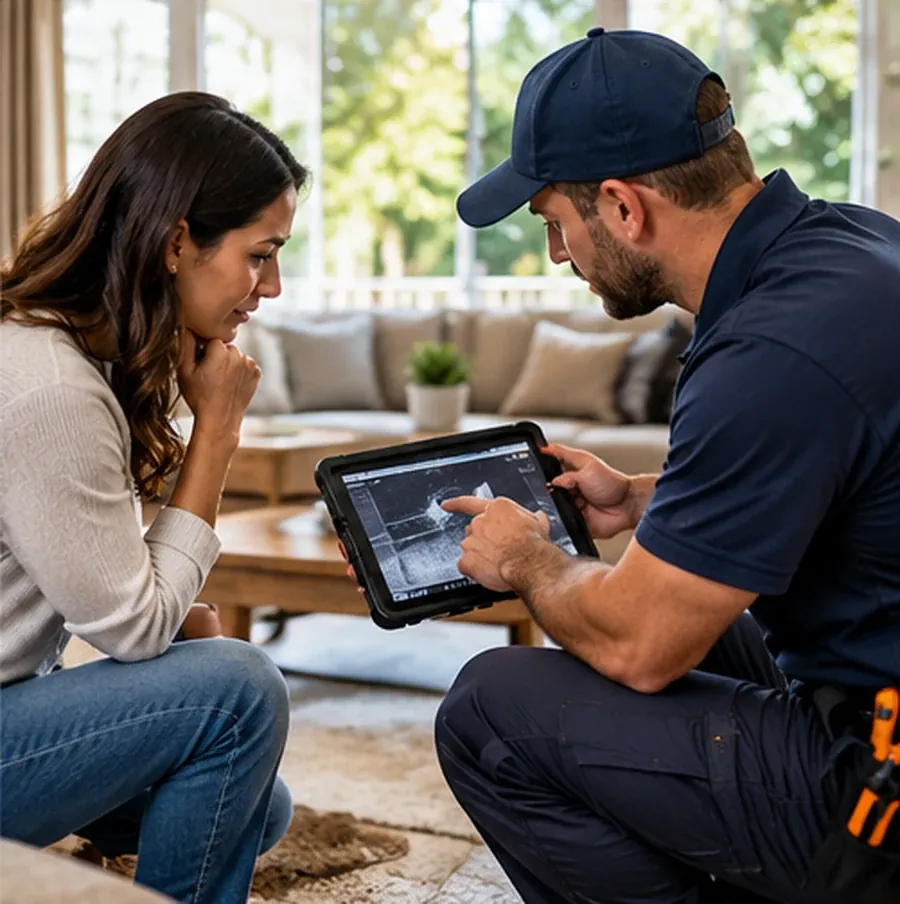
Our leak location and diagnostic assessment produces findings you can share with owners, tenants, and repair contractors.
What to do first — whoever you are
- Limit damage. If water is actively spreading, shut off the unit's water supply if you can do so safely, move belongings, and keep clear of water near electrical outlets.
- Notify the right people. Owners: your HOA or manager. Renters: your landlord. If water is reaching a neighbor's unit, let them know too.
- Document. Photos, dates, water bills, and notes on where you see moisture or warmth.
- Dry what you can. The EPA advises drying water-damaged materials within 24–48 hours where possible to prevent mold growth.
- Coordinate detection. Agree with the association or landlord on who schedules leak detection, so the findings are accepted by everyone.
- Notify insurers. The California Department of Insurance advises reporting damage promptly, photographing it, and keeping receipts for temporary repairs.
How insurance fits in
In a condo, the association's master policy and your unit-owner (HO-6) policy may each cover different parts of a loss — for example, building elements versus interior finishes and personal property. Many policies distinguish the failed pipe itself from resulting water damage, and standard homeowners policies typically exclude damage from routine wear and tear. Read both policies, ask your agent, and see our guide: Does homeowners insurance cover slab leaks?
Why accurate leak location settles a lot
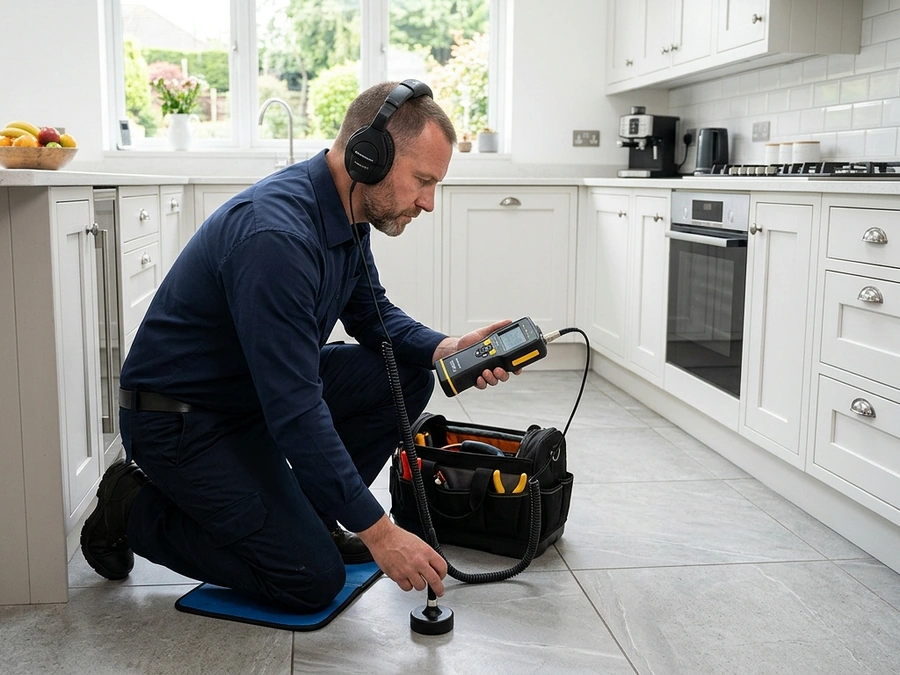
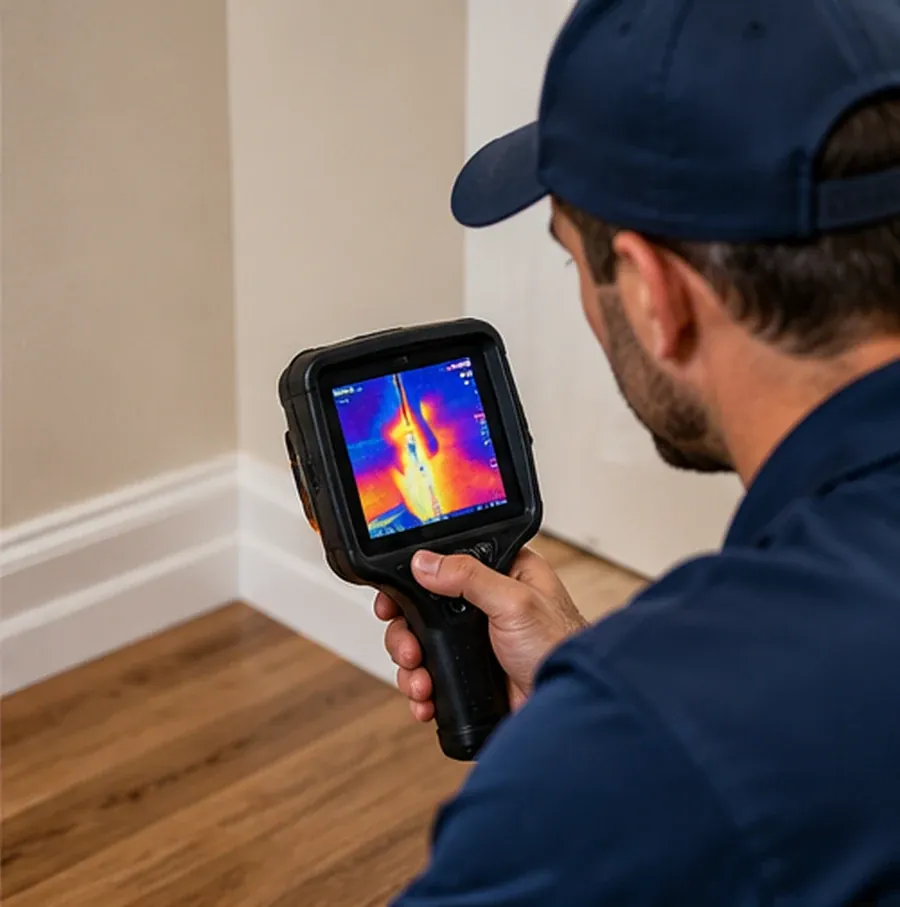
Responsibility in shared buildings often depends on facts nobody can see: which line is leaking, which unit it serves, and where the leak sits relative to unit boundaries. Professional detection answers those questions. A clear finding — "the cold-water line serving Unit B is leaking under the hallway of Unit A, about here" — gives the association, owners, landlords, and insurers a shared starting point and helps avoid opening the wrong floor.
Learn how the process works in how professional slab leak detection works, and what to do next in our step-by-step action plan.
The bottom line
In a condo or townhome, who pays for a slab leak depends on where the pipe is and how your CC&Rs define it, against the default rules in California Civil Code § 4775. In a rental, plumbing repairs are generally the landlord's responsibility. In every case, act quickly to limit damage, put it in writing, and get the leak located so the conversation is based on facts. If your property is in the Whittier area, contact Precision Slab Leak Detection to talk through the situation.
Concerned about a possible slab leak in Whittier? Call Precision Slab Leak Detection at (562) 358-3136 to talk through what you are noticing and how an assessment would work for your property.
Frequently Asked Questions
It depends on your association's governing documents and where the leaking pipe is. Under California Civil Code § 4775, the association generally maintains common areas and owners maintain their separate interests, unless the declaration (CC&Rs) says otherwise. Pipes in or under the slab may be defined differently from one community to the next, so check your CC&Rs and talk to your manager.
California Civil Code § 4775 says the association is generally responsible for repairs needed to restore interrupted water, gas, heat or electrical service that originates in the common area, and the board must begin the process of making those repairs within 14 days of the interruption. Read the statute and your CC&Rs for the details that apply to you.
In California, a rental must have plumbing maintained in good working order and be capable of producing hot and cold running water (Civil Code § 1941.1). Plumbing repairs are generally the landlord's responsibility unless the tenant caused the damage. Report the leak to your landlord or manager in writing right away.
Coverage depends on your policy, the master policy, the cause, and the facts. Commonly, policies treat the failed pipe, the cost of access, and resulting water damage differently. Read both policies and contact your agent; see our guide to homeowners insurance and slab leaks.
Coordinate with your HOA or property manager before scheduling, especially if the leak may involve common plumbing or another unit. Many associations have procedures and preferred vendors. Clear, documented findings help the association and owners agree on responsibility.
Sources
- FindLaw (California Civil Code). California Civil Code § 4775 — Division of maintenance responsibilities (Davis-Stirling Act).
- Justia (California Code). California Civil Code § 1941.1 — Untenantable dwellings.
- California Department of Insurance. Residential Property Claims Guide.
- Insurance Information Institute. Homeowners Insurance Basics.
- U.S. Environmental Protection Agency. A Brief Guide to Mold, Moisture, and Your Home.
This article is general educational information, not a diagnosis of any specific property or professional plumbing, legal, insurance, or health advice. Conditions vary; consult qualified professionals for your situation.