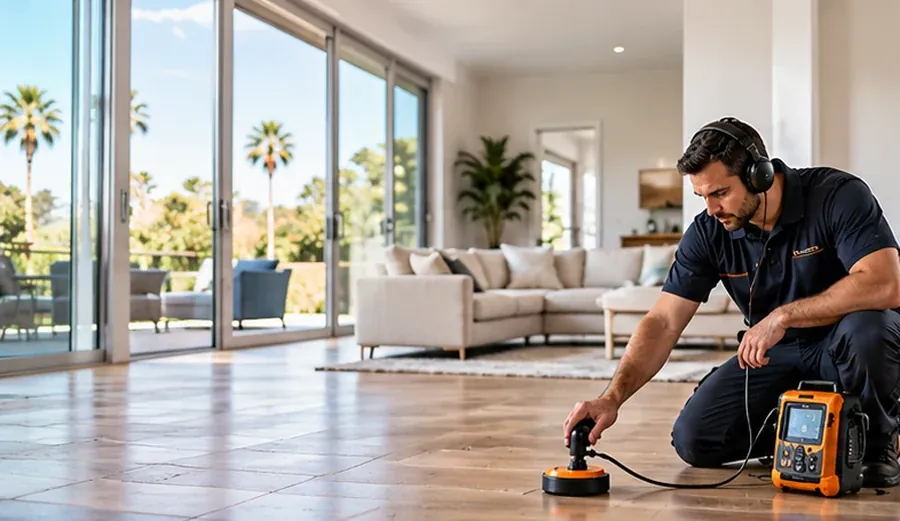
Slab Leak Detection
Investigate the signs of a possible leak beneath your concrete slab and find out where the problem is most likely located.
Rising water bill, a warm spot on the floor, or the sound of running water when everything is off? We investigate suspected leaks beneath concrete foundations and help you find out where the problem is — before anyone starts opening floors.
Speak with us directly: (562) 358-3136
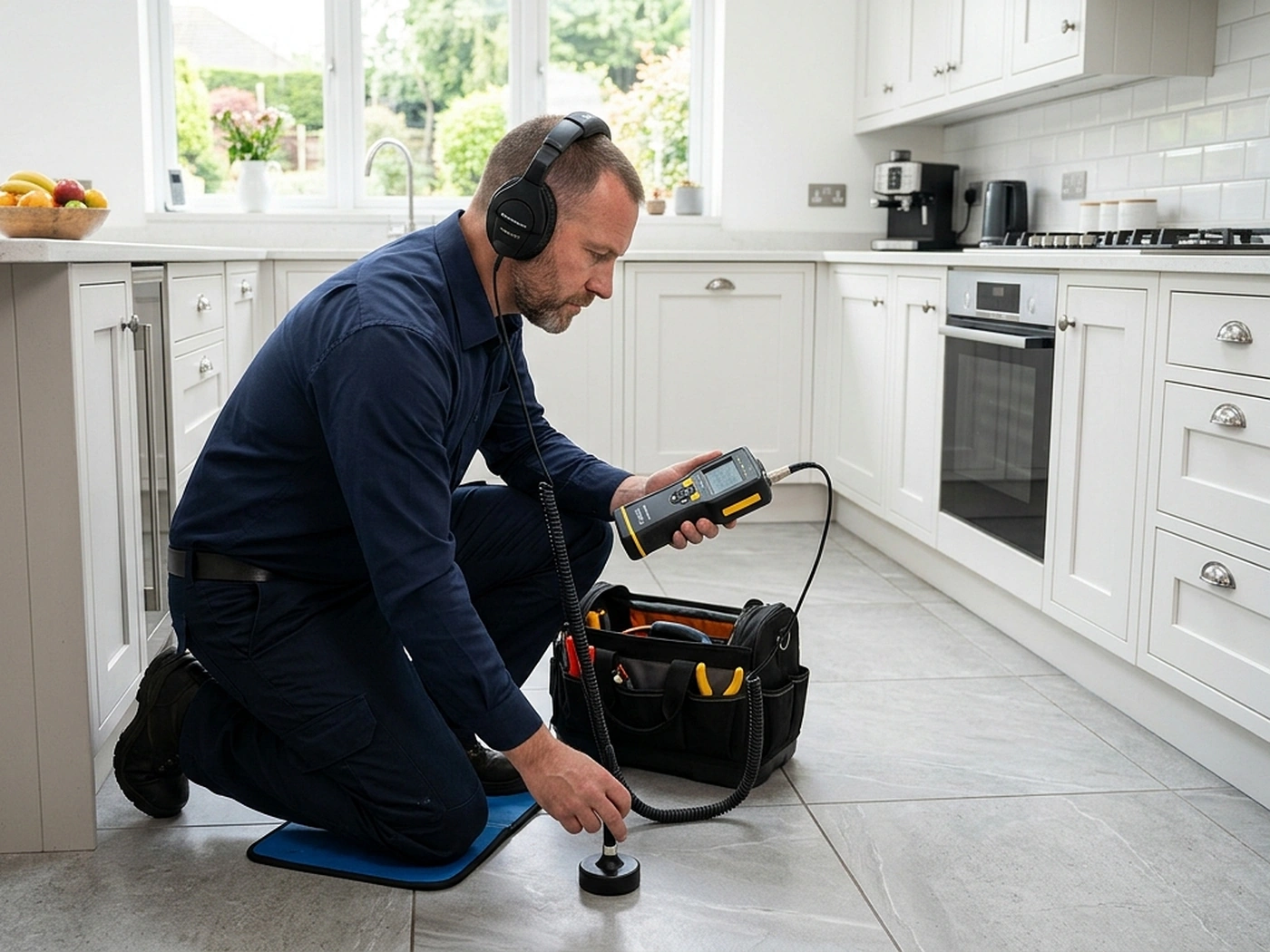
Focused services to help locate hidden water leaks beneath your concrete foundation — so repairs can start in the right place.
Investigate the signs of a possible leak beneath your concrete slab and find out where the problem is most likely located.
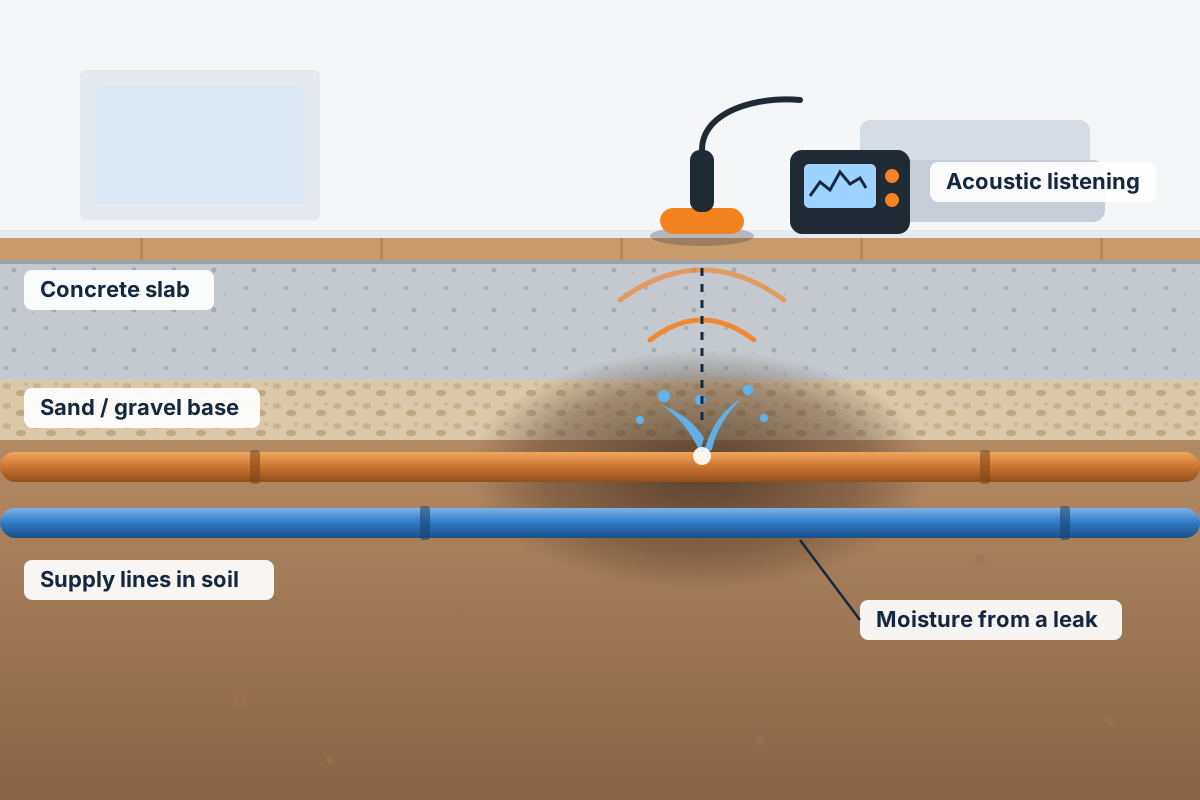
Targeted investigation of pressurized water lines that run below the foundation, to narrow down the leak area before any access work.

Electronic detection equipment that helps amplify and interpret leak signals that are hard to pick up without specialized tools.

Sensitive listening equipment used to follow the sound of water escaping a pressurized line and pinpoint where it is loudest.
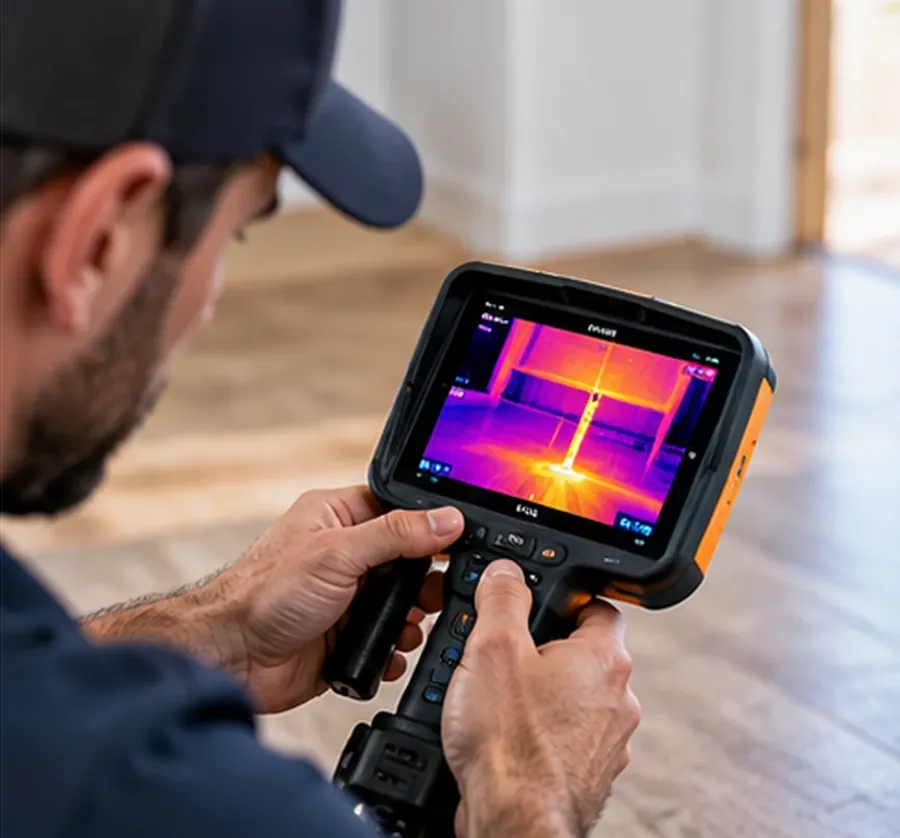
A structured assessment that brings the symptoms, plumbing layout, and test results together into clear findings and next steps.

A simple, careful process to find out what is happening beneath your floor.
Tell us what you are noticing, where, and when it started.
We review the symptoms and check fixtures, the water heater, and the meter.
We isolate lines and use suitable equipment to narrow down the leak area.
We explain what we found, how confident we are, and your options.
Detection happens from the surface. We narrow down the leak area before anyone considers opening a floor — and we tell you how confident we are in the result.
Learn how slab leak detection worksReal experiences from residential and commercial clients across Whittier who trusted us to locate hidden foundation leaks.
Noticed a hot patch on our hardwood hallway near the laundry room. Called Precision and the technician was out prompt the next morning. With acoustic sensors, he mapped the leak under the slab, preventing unnecessary floor demolition.
Our water bill jumped from $95 to over $340 in a single cycle. Precision tested the lines and used acoustic listening discs right on our kitchen floor. They located a hot water copper pinhole under the tile without cutting into our custom cabinets!
Superb diagnostic work. They isolated our hot and cold manifolds and identified pressure drop on the main branch under the foundation. Very transparent, provided an itemized diagnostic summary for our insurance claim. Highly recommended.
We had mysterious moisture showing up along our baseboards. Precision ran electronic pipe tracing and confirmed the exact point beneath our slab where the copper joint failed. Saved our contractor hours of exploratory drilling.
Honest, calm, and highly professional. Tested the meter, verified fixtures, and ruled out irrigation before confirming the under-slab supply line issue. Having an unbiased report before talking to repair companies was worth every penny.
Had a warm spot on our bathroom tile and heard faint rushing water when all faucets were closed. Technician arrived on time, was extremely respectful of our home, and found the exact pipe leak under the slab in under 90 minutes. Top notch!
Very knowledgeable technician who explained every pressure reading and audio test as he went. Found our buried supply line leak cleanly so our plumber only had to cut one single tile opening.
Our plumber suspected a slab leak but didn't have the specialized listening gear. Called Precision on a Monday morning—they pinpointed the leak under our living room slab the same afternoon. Clear explanation and honest pricing.
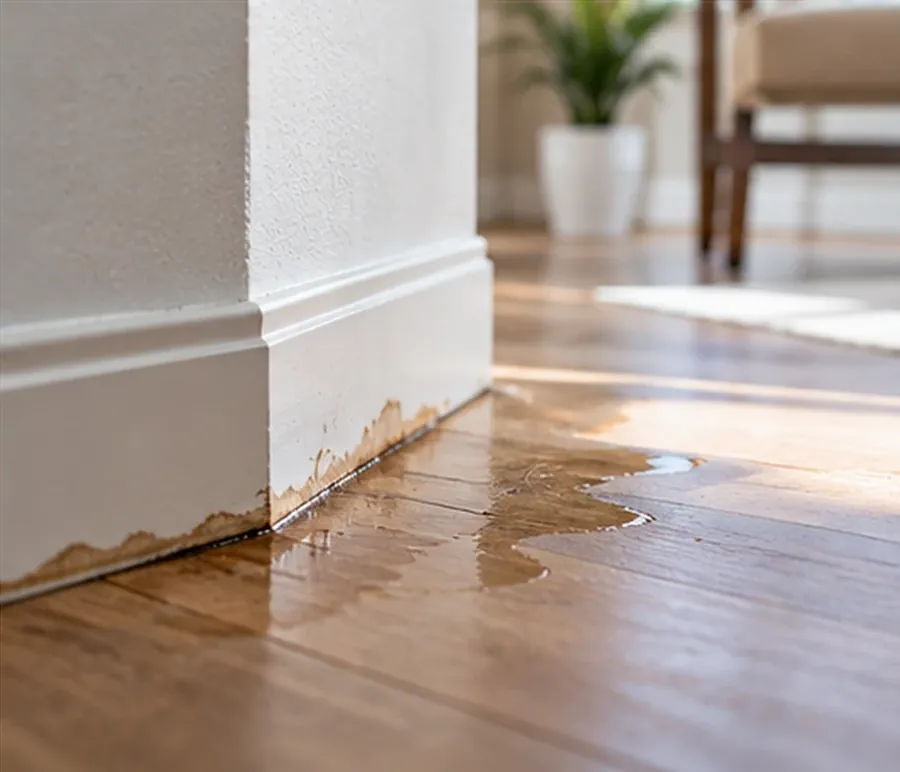
Watch for these common signs that could indicate a hidden leak beneath your concrete foundation. One sign alone is not proof — several together deserve a closer look.
We welcome calls from homeowners and property managers across Whittier, including these neighborhoods. Call to confirm scheduling for your address.
A leak beneath a slab does not stop on its own. Water under pressure keeps escaping, adding to your bill and keeping materials damp — and the U.S. EPA advises that wet materials should be dried within 24–48 hours to prevent mold growth.
Opening a floor to search for a leak is expensive and disruptive. Professional detection narrows down the likely leak area from the surface first, so a repair contractor can work in the right place and you can compare repair options with real information.
Residential and commercial properties where a hidden leak is suspected beneath the foundation.
Concerned about a rising bill, a warm floor, or moisture that will not go away.
Need clear findings to share with owners, tenants, and repair contractors.
Want leaks located with as little disruption to operations as possible.
Want to know where the leak is before committing to a repair approach.
Educational guides to help you understand slab leaks and protect your home.
The ten symptoms most often linked to slab leaks, what each one can (and can't) tell you, and a simple way to decide when it's time for a professional assessment.
What actually happens during professional leak detection — the common methods, what each one can and cannot tell you, and why the approach varies from home to home.
A walk-through of a typical slab leak inspection, what you will be asked, how to prepare your home, and what you should have in hand when it is done.
Straight answers to common questions about slab leaks and the detection process.
A slab leak is a leak in a water or drain line that runs in or beneath a home's concrete foundation. Because the pipe is hidden, you usually notice the effects — a higher water bill, a warm or damp floor, or the sound of running water — rather than the leak itself.
Common signs include unexplained increases in water use, a water meter that moves when everything is off, warm or damp flooring, persistent moisture or musty odors, and the sound of running water when fixtures are off. None proves a slab leak on its own. See our guide to 10 warning signs.
Yes. Water escaping beneath a slab often soaks into the soil and never reaches the surface. Rising water use or a moving meter may be the only early clues.
No — detection is done from the surface. We narrow down the leak area with methods such as acoustic and electronic detection before anyone considers opening the floor. Accessing the pipe for repair is a separate step.
Detection and repair are different services. Our focus is locating the leak and explaining what we find. Ask us about repairs and exactly what is included when you call, so the scope is clear before any work is scheduled.
If water is actively damaging your home, shutting off the main valve can limit damage while you get help. If signs are subtle, you can usually leave water on so the system can be tested. Read what to do if you suspect a slab leak.
It depends on the size and layout of the property, plumbing access, and how many methods are needed. We can give you a better idea once we understand the symptoms.
What you have noticed and where, when it started, whether your water bill or meter readings have changed, the approximate age of the home, and any past plumbing repairs. Photos are helpful too.
Tell us what you have noticed. We will talk through the symptoms, explain how an assessment works, and help you decide on the right next step.