Key takeaways
- A hot-water slab leak often shows up as a warm floor, a water heater that runs more than usual, and higher energy and water bills.
- A cold-water slab leak usually shows no heat — just rising water use, a moving meter, or dampness.
- A careful meter check with the water heater's supply closed can suggest which side is leaking. Professionals confirm it by isolating and pressure testing each line.
In this article
"How do I know if I have a slab leak?" is one of the most common questions homeowners ask. Part of the answer lies in a detail most people never think about: there are two kinds of supply line under many slabs — hot and cold — and leaks on each leave different clues. Understanding the difference helps you read the signs, talk to a professional more clearly, and make better repair decisions.
Why the hot and cold lines behave differently
Both lines carry pressurized water, so a leak on either one runs continuously and adds to your water use. The differences come from temperature:
- Heat: Water escaping a hot line warms the concrete and flooring above it. Cold water does not.
- Movement: Hot-water pipes expand and contract each time hot water runs. Where they rub against concrete or gravel, that repeated movement can contribute to wear — one reason hot lines are often involved in slab leaks. (See what causes slab leaks.)
- Energy: A hot-water leak makes your water heater work to replace lost hot water, which can raise gas or electric use.
Signs of a hot-water slab leak
- A warm or hot spot on the floor — often noticed barefoot, or when a pet starts lying in one place.
- A water heater that seems to run constantly or recovers more often than usual.
- Higher gas or electric bills alongside a higher water bill.
- Less hot water than usual, or hot water that takes longer to arrive.
- Sound of running water near the water heater or along the floor when nothing is on.
Rule out the obvious first: radiant floor heating, heating ducts under the floor, appliances, and sunny spots can all warm a floor. A warm area matters most when it is new, persistent, and has no other explanation.
Signs of a cold-water slab leak
- A higher water bill with no change in habits.
- A water meter that moves when every fixture and appliance is off.
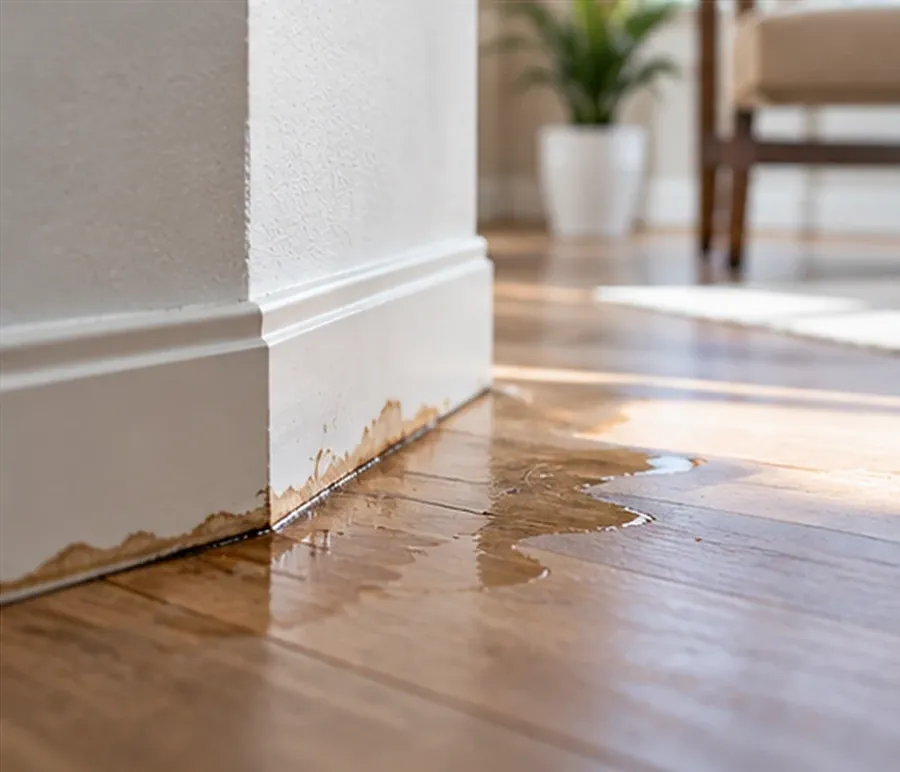
- Damp or cool flooring, loose tile, swollen wood, or musty odors.
- The sound of running water when nothing is running.
- No warmth at all — which is itself a clue.
Cold-water leaks can be quieter in their symptoms, which is why many homeowners discover them through the bill or the meter. Our guide to checking for unexplained water usage shows how.
Side-by-side comparison
| Clue | Hot-water line leak | Cold-water line leak |
|---|---|---|
| Warm spot on floor | Common | Not expected |
| Water heater running more | Common | Not expected |
| Higher gas/electric bill | Possible | Not expected |
| Higher water bill | Common | Common |
| Meter moves with everything off | Usually | Usually |
| Damp flooring or odors | Possible | Possible |
| Shows on thermal imaging | Often helpful | Usually limited |
Typical patterns, not rules. Many homes show only one or two clues.
A careful home check: which side is leaking?
This check uses your water meter and the shutoff valve on your water heater's cold inlet. It can suggest which side is leaking, but it is not definitive. Only do it if the valves turn easily — never force a stiff valve.
- Turn off all water use inside and outside: faucets, toilets (after they refill), irrigation, ice maker, washer, dishwasher.
- Check the meter. Look at the low-flow indicator, which, as the City of Hayward explains, can register even small flows. If it is not moving, a significant supply leak is less likely right now.
- If it is moving, close the cold-water inlet valve on top of the water heater. This stops water from feeding the hot side of the house.
- Watch the meter again for several minutes.
- If the movement stops, the leak may be on the hot side — or in the water heater itself.
- If it keeps moving, the leak is likely on the cold side (or another fixture you missed).
- Reopen the water heater valve when you finish. If you will keep it closed, follow the manufacturer's instructions for the heater — many recommend turning it off or to a vacation setting.
Limits of this check. Some homes have more than one water heater, recirculation pumps, or plumbing arrangements that make this test less clear. A leaking water heater or relief valve can also mimic a hot-line leak. Treat the result as a clue to share with a professional, not a diagnosis.
How professionals confirm which line is leaking
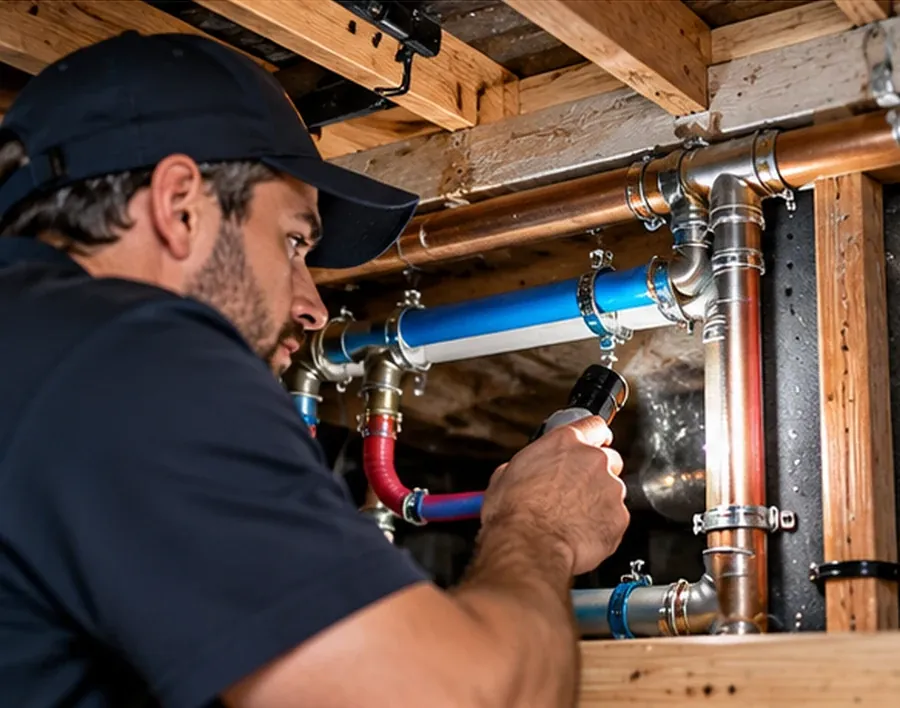
A leak detection technician isolates each side and pressure tests it. The EPA's WaterSense technical guidance describes the basic idea: with the main valve closed, a gauge should hold constant pressure for 5 to 10 minutes, and a drop indicates a leak. Testing hot and cold sides separately shows which one is losing pressure.
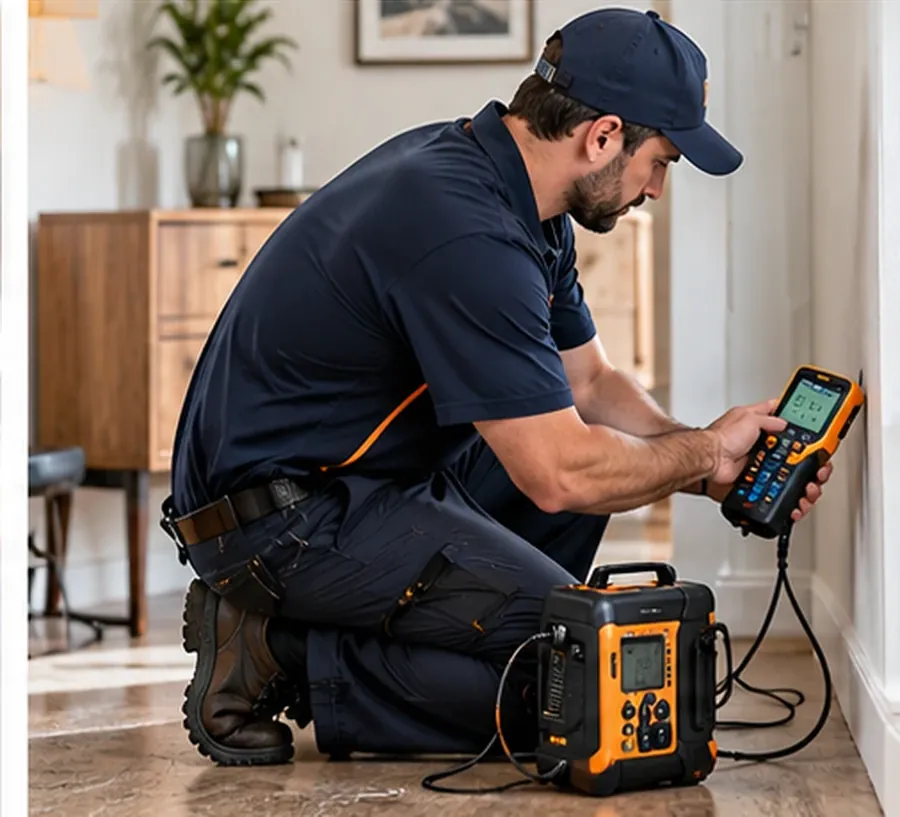
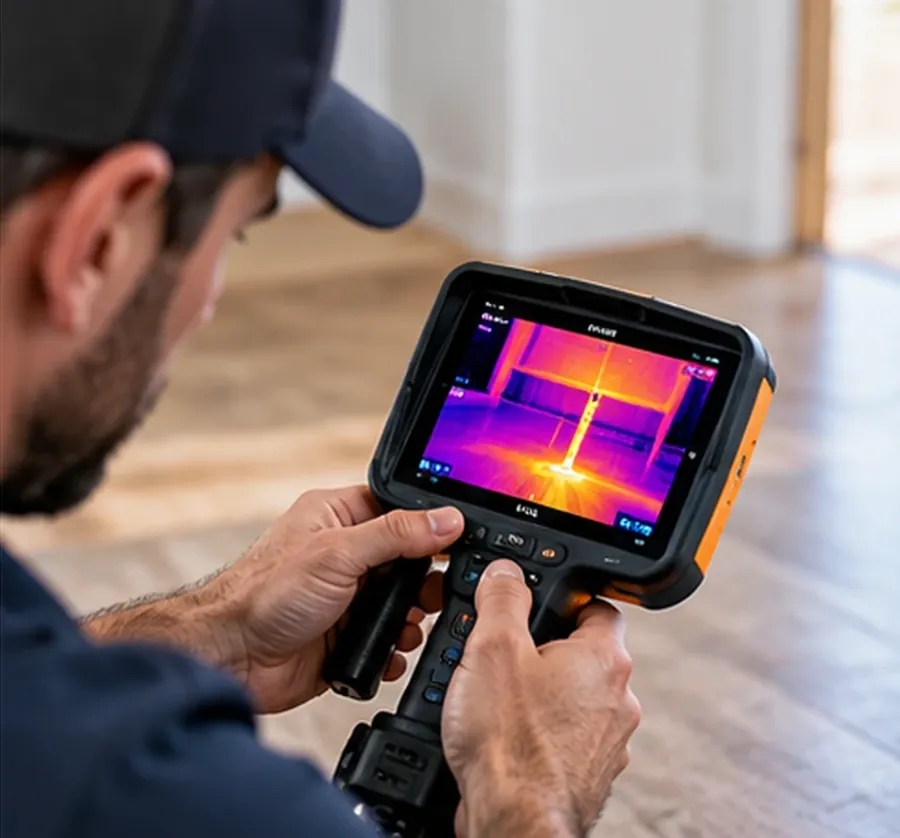
Once the line is known, the technician chooses tools to locate the leak. Thermal imaging can help on hot lines — though thermal camera maker Teledyne FLIR notes that a pattern that looks like moisture does not guarantee water is present, so results are cross-checked. On either line, acoustic and electronic leak detection are used to narrow down the leak area.
Why it matters for the repair
- Repair choice: A hot line that has leaked once may have other worn spots, which can make a reroute worth considering. See slab leak repair options.
- Urgency: Hot-water leaks waste both water and energy. Household leaks overall can account for more than 9,300 gallons of wasted water a year in the average home, according to the EPA.
- Safety: Hot water near flooring and materials keeps them damp and warm, so drying and repair should not wait.
The bottom line
A warm floor, a busy water heater, and higher energy bills point toward a hot-water slab leak; rising water use and a moving meter without heat point toward the cold side. A careful home check can give you a useful clue, but confirming the line and pinpointing the leak takes professional testing. If you are seeing these signs in the Whittier area, our slab leak detection service can isolate the line and narrow down where the water is escaping. For the full list of symptoms, read 10 signs of a slab leak.
Concerned about a possible slab leak in Whittier? Call Precision Slab Leak Detection at (562) 358-3136 to talk through what you are noticing and how an assessment would work for your property.
Frequently Asked Questions
Hot-water lines are frequently involved in slab leaks, partly because they expand and contract each time hot water runs, which can cause wear where pipes touch hard surfaces. But cold-water lines leak too. Testing, not assumption, tells you which line is affected.
Generally no. A cold-water leak does not add heat. It may make an area feel cool or damp instead, or show no surface sign at all. A warm area points toward a hot-water line, though heating ducts, radiant heat, and appliances can also warm floors.
Usually, if the valve turns easily. Many water heaters have a shutoff valve on the cold inlet. Do not force a stiff or corroded valve, and follow your water heater manufacturer's instructions before leaving it off for long; many recommend turning the heater off or to a vacation setting when its water supply is shut off. If unsure, ask a plumber.
It affects the repair. A hot-water line that has leaked may be a candidate for a reroute, and knowing which line is affected also helps the technician choose detection methods — for example, thermal imaging is most useful on hot-water lines.
Home checks can suggest whether a leak exists and whether it is on the hot or cold side, but pinpointing a leak under concrete requires professional equipment such as acoustic and electronic detection.
Sources
- U.S. Environmental Protection Agency. Free of Leaks — Technical Reference Manual for WaterSense Labeled Homes (EPA-832-F-23-016, July 2023).
- Teledyne FLIR. How To Detect a Water Leak with Thermal Imaging.
- City of Hayward, California. How to Read Your Water Meter.
- City of Healdsburg, California. Read Your Water Meter and Identify Leaks.
- U.S. Environmental Protection Agency, WaterSense program. Fix a Leak Week.
This article is general educational information, not a diagnosis of any specific property or professional plumbing, legal, insurance, or health advice. Conditions vary; consult qualified professionals for your situation.